


How to Stop Your Dog Lunging at Other Dogs on Walks
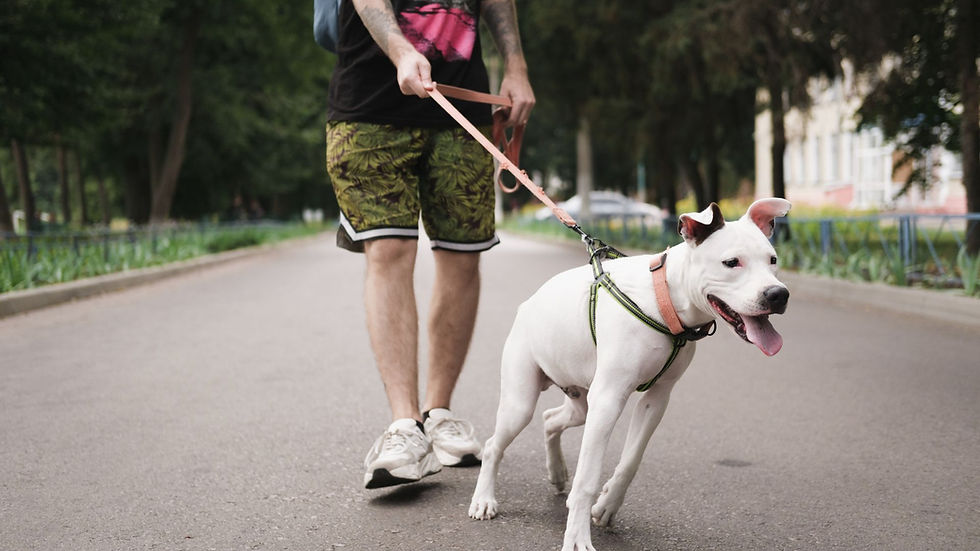
If your dog lunges at other dogs (or anything else!) on walks, you’re not alone. This is one of the most common reasons frustrated owners search for a dog trainer or behaviourist.
It can be embarrassing, stressful, and sometimes even scary when your dog suddenly pulls hard on the lead, barks, growls, or charges toward another dog.
The good news is that this behaviour is very common, and with the right approach it can improve significantly.
Why Dogs Lunge at Other Dogs on Walks
Dogs don’t usually lunge “out of nowhere”. There is always a reason behind the behaviour. Most of the time, lunging happens because of frustration or fear.
Some dogs desperately want to go and play or greet the other dog, but the lead stops them. That frustration builds up and explodes into lunging.
Other dogs are feeling worried or uncomfortable and are trying to push the other dog away. Lunging can be their way of saying:
“Please go away and give me space.”
Sometimes lunging is paired with:
Barking
Growling
Snapping
But not always. Some dogs lunge silently, which can still be very startling for owners.
Very occasionally dogs may lunge because they feel genuinely angry or defensive, but this is less common than frustration or fear.
The First Step: Work Out Why Your Dog Is Lunging
Before you try to stop the behaviour, it’s important to ask:
What is my dog trying to achieve?
For example:
Frustrated dogs
Pull hard towards the other dog
May whine or bark in high pitch
Often love playing with dogs once they reach them
Worried dogs
Freeze or stare first
Bark or growl to push the dog away
May avoid interaction if given space
Understanding this helps you choose the right training approach.
Step 1: Stop Walking in Busy Areas (For Now)
One of the biggest mistakes owners make is continuing to walk their dog in busy places full of triggers. If your dog is constantly seeing other dogs up close, they never get a chance to learn calmer behaviour.
Instead, try:
Quiet parks
Open spaces
Fields or quieter paths
Walking at quieter times of day
The goal is to create distance from other dogs so your dog can stay calmer and actually learn.
Step 2: Teach Your Dog to Look at You
One of the most useful skills for reactive dogs or dogs that lunge at other dogs is teaching them to check in with you.
Here’s a simple exercise to start:
Hold a treat behind your back.
Wait quietly for your dog to look at your face.
The moment they do, say “YES!”
Then give them the treat.
Repeat this many times.
At first, practice this:
In your home
In the garden
On quiet walks
You want your dog to learn that looking at you is rewarding and normal.
Step 3: Practice Around Other Dogs (From a Distance)
Once your dog understands the game, you can begin using it around other dogs.
The key is distance.
Start far enough away that your dog notices the other dog but does not lunge.
Then:
Wait for your dog to look at you
Say YES
Give the treat
Over time your dog begins to learn:
“When I see another dog, looking at my owner is a good idea.”
This can dramatically reduce lunging behaviour.
Remember: This Is Just the Beginning
Stopping a dog from barking and lunging at other dogs on walks usually requires a structured training plan.
This blog only scratches the surface, but these steps can start helping you regain a little control on walks.
With the right training, many dogs learn to walk calmly past other dogs and feel far more relaxed outside.
Need Help With a Dog That Lunges on Walks?
If your dog:
Lunges at other dogs/people/traffic or anything else
Barks or growls on walks
Feels impossible to control outside
Has become stressful to walk
You don’t have to figure it out alone. I specialise in helping owners with reactive dogs, anxious dogs, and dogs that struggle around other dogs.
If you'd like professional support, you can book a call with me and we’ll create a training plan tailored to your dog.
Hope to speak soon! Karolina :-)


Comments